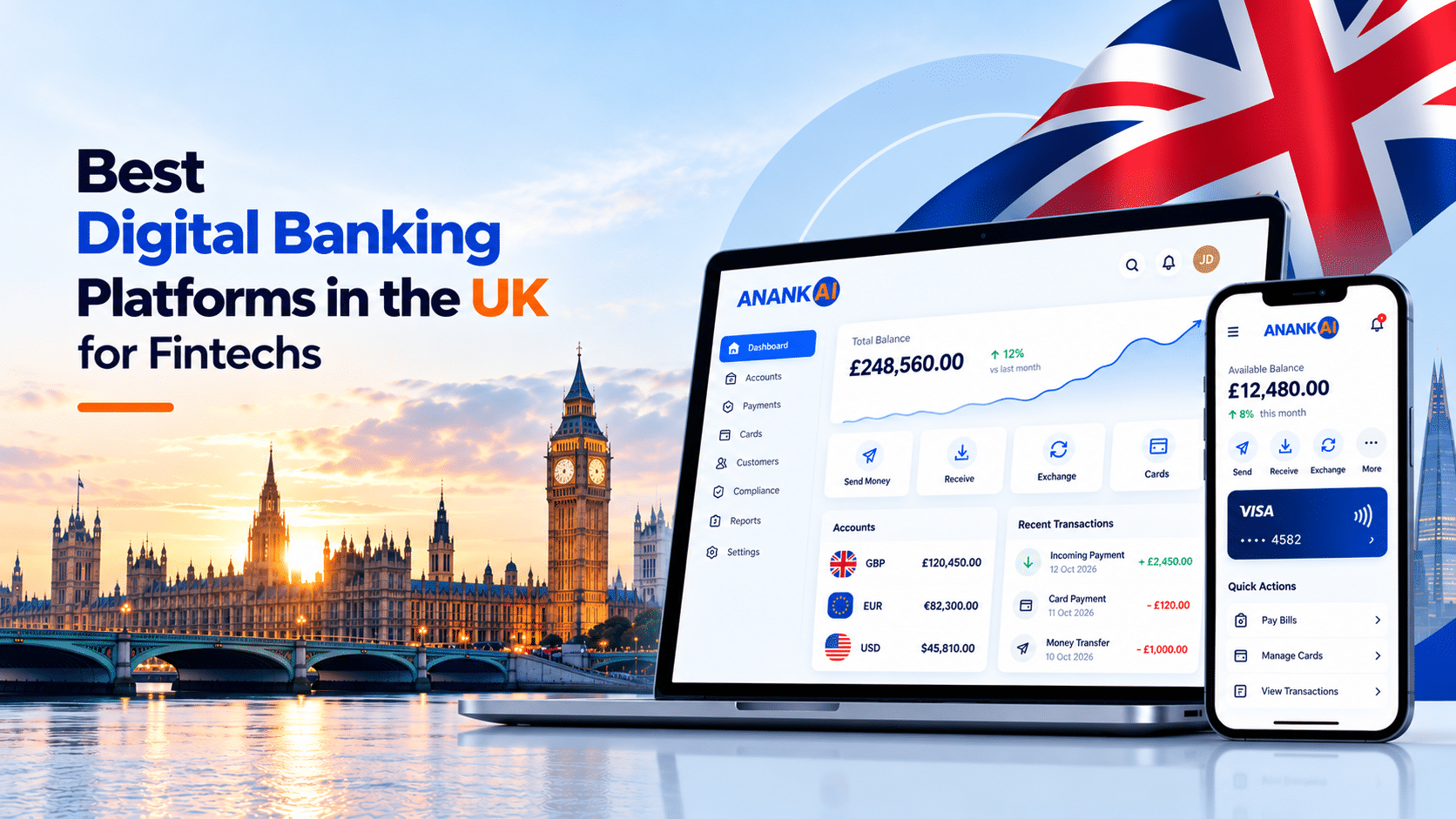
1. AnankAI
AnankAI provides a modular, API-first platform for fintechs, EMIs, PSPs, neobanks and financial institutions. Its capabilities cover digital wallets, accounts, payment processing, card management, KYC/KYB, AML and sanctions screening, transaction monitoring, reconciliation, analytics and third-party API integrations.
For fintechs, the modular approach is particularly relevant when the business needs several financial capabilities without developing each component internally. The platform can be used as a technology layer connecting financial products, service providers and customer-facing applications.
2. Mambu
Mambu is a cloud-native banking platform designed around composable banking architecture. It provides core banking capabilities through APIs and is used by financial institutions building or modernising digital banking products.
Its approach can be relevant for fintechs that want to configure banking products and connect the core with specialist providers rather than operate a traditional monolithic banking environment.
3. Thought Machine
Thought Machine provides cloud-native core banking technology through its Vault platform. The platform is designed to give financial institutions control over banking products while using a cloud-based architecture.
It is particularly relevant to fintechs and banks looking to build differentiated banking products rather than relying entirely on preconfigured product structures.
4. 10x Banking
10x Banking provides cloud-native core banking technology focused on building and operating modern banking products. Its platform is designed around real-time, event-driven banking infrastructure and supports configurable financial products.
For fintechs considering a modern core rather than simply adding a digital interface to an existing banking system, 10x is one platform worth evaluating.
5. Temenos
Temenos provides a broader banking technology portfolio covering core banking, digital banking and payments. It is commonly associated with larger financial institutions, but its digital and core capabilities can also be relevant to fintechs with more complex banking requirements.
The main consideration for a fintech is whether the platform’s breadth matches its actual requirements, particularly when compared with more modular cloud-native alternatives.
How Should Fintechs Evaluate a Digital Banking Platform?
A platform should be assessed against the fintech’s operating model rather than simply the number of features advertised.
Core banking and ledger: Determine whether the platform provides the required account, balance, ledger and transaction capabilities or whether these need to come from another provider.
Payments: Check support for the payment methods and payment infrastructure required by the business, including domestic and international payments.
APIs and integrations: API quality is critical for fintechs. The platform should integrate with payment providers, card issuers, KYC/KYB providers, AML tools, banking partners and other financial infrastructure.
Compliance: Technology should support KYC, KYB, sanctions screening, transaction monitoring, audit trails and relevant reporting workflows.
Cards and wallets: If cards or digital wallets are part of the product, assess whether these capabilities are native or require multiple external integrations.
Scalability: The platform should be able to support growth in customers, accounts and transaction volumes without requiring a complete technology replacement.
Implementation: Evaluate migration, integration, configuration, testing, support and ongoing maintenance. A platform with extensive functionality can still become expensive or difficult to implement if the integration model is unsuitable.
UK Requirements for Fintech Banking Platforms
UK fintechs need to consider regulatory requirements alongside technology selection. Firms providing payment services or electronic money services may fall under the FCA’s regulatory framework, depending on their activities and permissions.
The FCA’s requirements for payment institution applicants include areas such as governance, risk management, safeguarding, money laundering controls, security policies and incident reporting. From 7 May 2026, new safeguarding rules also apply to relevant payment and e-money firms.
Open banking is another important consideration. The UK had more than 16 million active open banking users in 2025, while open banking payments grew by 53% year on year. The FCA is also developing the longer-term framework for open banking and open finance.
This means fintechs should evaluate whether their chosen platform can support secure APIs, consent management, account connectivity, payment initiation and integration with regulated third-party providers.
Conclusion
The best digital banking platform for a UK fintech depends on its products, regulatory model, technology architecture and growth plans. Platforms such as AnankAI, Mambu, Thought Machine, 10x Banking and Temenos offer different approaches, so fintechs should evaluate them against their specific operational and technical requirements.
For more information, contact us.