As UK fintech startups expand into international markets, the ability to send and receive cross-border payments is becoming a fundamental business requirement. Whether you’re launching a digital wallet, payment platform, embedded finance solution, or multi-currency business account, reliable access to SEPA and SWIFT payment networks is essential.
However, choosing the right payment infrastructure involves much more than comparing transaction fees. A modern payment platform should also support regulatory compliance, customer fund safeguarding, reconciliation, real-time reporting, API integrations, and the scalability needed to support long-term growth.
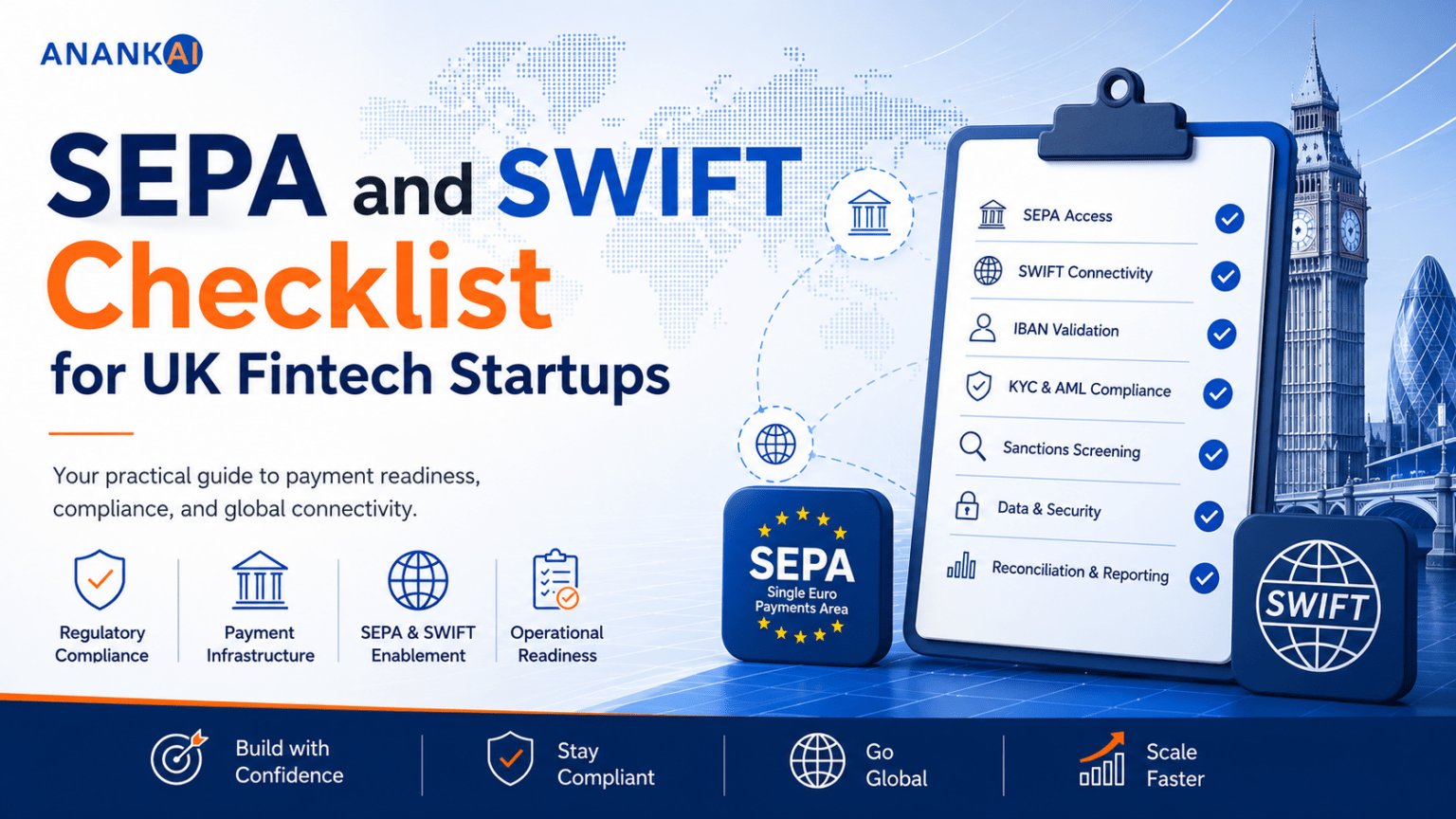
This checklist outlines the key considerations every UK fintech startup should evaluate before selecting a SEPA and SWIFT payment infrastructure provider.
Why SEPA and SWIFT Matter for UK Fintech Startups
SEPA (Single Euro Payments Area) enables fast and secure euro-denominated payments across participating European countries. It supports services such as:
- SEPA Credit Transfer
- SEPA Instant Credit Transfer
- SEPA Direct Debit
For UK fintechs serving customers or businesses across Europe, SEPA simplifies euro collections and payouts while improving payment efficiency.
SWIFT (Society for Worldwide Interbank Financial Telecommunication) provides the global messaging network used for international payments across multiple currencies and jurisdictions. It enables fintechs to process payments far beyond Europe and connect with financial institutions worldwide.
Today’s customers increasingly expect a single platform that supports:
- Faster Payments for UK transactions
- SEPA for euro payments across Europe
- SWIFT for international transfers
- Multi-currency accounts
- Cross-border business payments
Building on flexible payment infrastructure from the outset makes future expansion significantly easier and avoids costly migrations later.
1. Confirm the Payment Rails You Need Are Supported
Not every infrastructure provider offers comprehensive support for both SEPA and SWIFT services.
Before selecting a provider, verify support for:
- SEPA Credit Transfer
- SEPA Instant
- SEPA Direct Debit
- SWIFT international payments
- Faster Payments
- CHAPS
- Multi-currency transfers
- Local payment schemes in your target markets
Your product may initially launch in one country but quickly expand into new regions. Choosing scalable payment infrastructure from the beginning reduces future operational complexity.
2. Understand Settlement Speed
Fast settlement is no longer a competitive advantage, it’s becoming an industry expectation.
SEPA Instant enables participating payment service providers to transfer euro payments in seconds. According to the European Payments Council, funds are made available to the recipient in less than ten seconds.
The UK payment ecosystem is also evolving. The Bank of England has confirmed that CHAPS settlement hours will begin earlier from September 2027, with further consultation underway on extending settlement to Sundays and selected bank holidays.
For fintech startups, this means payment infrastructure should support:
- Faster settlement cycles
- Extended operating hours
- Real-time payment monitoring
- Improved operational visibility
3. Ensure Compliance Is Integrated
Compliance should be embedded into your payment infrastructure—not managed through disconnected systems.
A robust platform should include:
- KYC verification
- KYB onboarding
- AML transaction monitoring
- Sanctions screening
- Risk alerts
- Suspicious activity workflows
- Audit trails
- Case management
Integrated compliance helps EMIs, PSPs, and regulated fintechs streamline operations while meeting ongoing regulatory obligations.
4. Assess Safeguarding and Fund Segregation
For UK payment institutions and electronic money institutions, safeguarding customer funds is a regulatory requirement.
The Financial Conduct Authority (FCA) requires firms to protect relevant customer funds through segregation or approved safeguarding arrangements.
Before selecting a provider, ask:
- Can customer funds be clearly segregated?
- Are safeguarding accounts supported?
- Can relevant funds be identified automatically?
- Does the platform support internal and external reconciliations?
- Can compliance reports be generated efficiently?
Strong safeguarding capabilities enhance both regulatory compliance and customer confidence.
5. Evaluate Reconciliation Capabilities
As transaction volumes increase, reconciliation becomes increasingly complex.
Your payment infrastructure should automate reconciliation for:
- Incoming payments
- Outgoing payments
- Transaction fees
- Foreign exchange conversions
- Refunds
- Failed payments
- Customer wallet balances
- Safeguarded account balances
The FCA also requires firms to perform safeguarding reconciliations on every reconciliation day.
Automated reconciliation improves operational efficiency and reduces manual errors.
6. Look for Virtual IBAN Support
Virtual IBANs have become an important feature for many fintech platforms.
They help simplify:
- Customer payment identification
- Automatic payment allocation
- Faster reconciliation
- Multi-entity operations
- Segregated account structures
However, virtual IBAN functionality should also include transaction visibility, ledger management, AML monitoring, and reporting capabilities to support regulatory requirements.
7. Review API Capabilities
Payment infrastructure should grow alongside your business.
Look for providers that offer:
- Comprehensive payment APIs
- Webhooks
- Sandbox environments
- Developer documentation
- Custom workflow support
- Compliance integrations
- Real-time payment status updates
Flexible APIs make it easier to launch new products, enter additional markets, and integrate with third-party services.
8. Prioritise Reporting and Operational Visibility
Operations teams need complete visibility across the payment lifecycle.
A modern platform should provide real-time access to:
- Payment status
- Settlement progress
- Failed transactions
- Customer balances
- FX charges
- Compliance alerts
- Reconciliation reports
- Audit history
Centralised reporting improves operational efficiency, accelerates issue resolution, and enhances the customer experience.
Final Thoughts
SEPA and SWIFT connectivity is only one part of building a successful payment platform.
The right payment infrastructure should combine payment processing with compliance automation, safeguarding, reconciliation, virtual IBAN management, API connectivity, and operational reporting in a single, scalable platform.
While many fintech startups begin with relatively simple payment requirements, fragmented systems often create operational challenges as transaction volumes grow. Investing in integrated payment infrastructure early helps support sustainable growth and regulatory readiness.
AnankAI provides fintech technology infrastructure that enables EMIs, PSPs, and fintech companies to manage digital accounts, SEPA and SWIFT payment workflows, compliance automation, AML transaction monitoring, reconciliation, virtual IBANs, and reporting through a unified platform designed for regulated financial services.