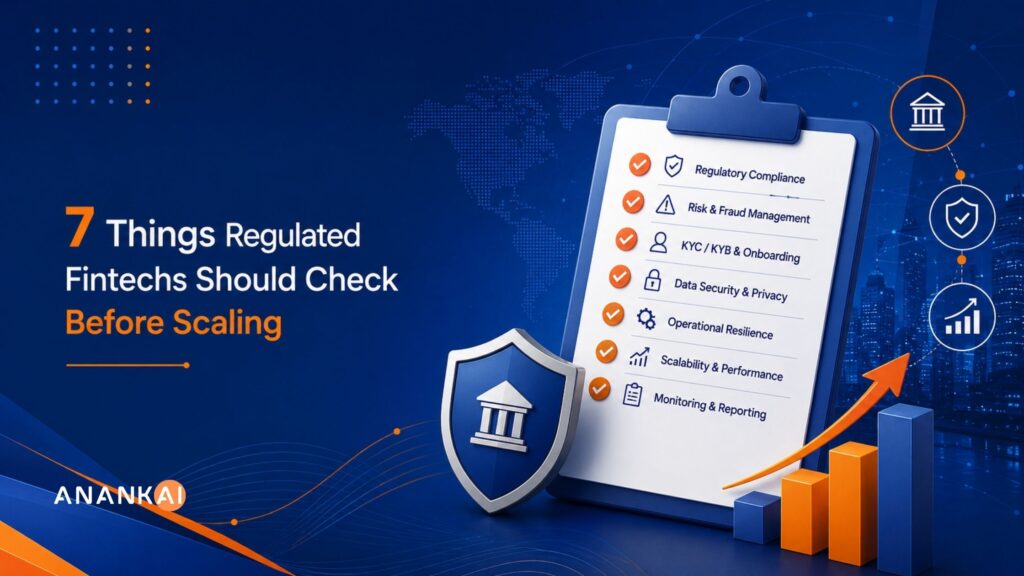
7 Things Every Regulated Fintech Should Review Before Scaling
Growth is one of the biggest milestones for any fintech, but in a regulated environment, scaling successfully requires far more than acquiring new customers or processing higher transaction volumes. As operations expand, weaknesses in compliance, payments, reconciliation, safeguarding, and reporting become much more visible.
Before taking the next step, here are seven areas every regulated fintech should evaluate.
1. Safeguarding Customer Funds
For UK Electronic Money Institutions (EMIs) and Payment Institutions (PIs), safeguarding customer funds is a regulatory obligation—not simply a best practice. Firms must ensure relevant customer funds are protected, typically by keeping them separate from the firm’s own money. They must also maintain accurate reconciliations, safeguarding records, and supporting documentation.
Before scaling, consider:
Can customer funds be clearly segregated?
Can relevant funds be identified immediately when required?
Are safeguarding records complete and readily available?
Can daily reconciliations be completed efficiently without relying on manual processes?
Strong safeguarding processes become increasingly important as transaction volumes grow.
2. Reconciliation Processes
As payment volumes increase, so do refunds, chargebacks, settlement adjustments, FX differences, and payment exceptions.
If reconciliation still relies heavily on spreadsheets or manual intervention, operational risk rises quickly. Modern fintech platforms should automatically reconcile transactions, balances, fees, settlements, and wallet movements while maintaining a complete audit trail.
Reliable reconciliation provides operational confidence as the business expands.
3. Embedded Compliance Workflows
Compliance should be integrated into everyday operations rather than managed across disconnected systems.
Before scaling, review whether your platform supports:
Connected compliance workflows help reduce manual effort while improving oversight and response times.
4. Payment Infrastructure Readiness
As fintech businesses expand into new markets, payment requirements become increasingly complex.
Your infrastructure should be capable of supporting multiple payment rails, including:
Faster Payments
CHAPS
SEPA
SWIFT
Local payment networks
Multi-currency payments
Beyond connectivity, businesses should also have clear visibility into settlement status, payment tracking, and exception management across every payment route.
5. Virtual IBAN Management
Virtual IBANs can simplify collections, customer identification, and reconciliation by assigning dedicated account references to individual customers or transactions.
However, scaling Virtual IBAN programmes requires robust operational controls and transparency.
Before expanding usage, assess whether your platform provides:
Clear visibility of end users
Complete transaction traceability
Accurate ledger management
Transparent fund ownership records
Strong controls help support operational efficiency while maintaining oversight.
6. Operational Resilience
Growth places additional pressure on technology platforms, payment providers, third-party vendors, and internal support teams.
Operational resilience should be built into the platform from the beginning.
Key questions include:
What happens if a payment provider becomes unavailable?
Can critical services continue during an outage?
Are incidents recorded and managed effectively?
Are third-party dependencies regularly assessed?
Preparing for disruption before it occurs reduces operational risk as the business scales.
7. Reporting and Audit Readiness
Regulated fintechs must be able to demonstrate exactly what happened, when it occurred, who approved it, and how issues were resolved.
Effective infrastructure should provide:
Real-time operational dashboards
Exportable management reports
Customer fund records
Complete transaction histories
Case management notes
Approval records
Comprehensive audit trails
If reporting still requires days of manual preparation, scaling will only increase operational pressure.
Final Thoughts
Scaling a regulated fintech is about much more than increasing transaction volumes or onboarding new customers. Sustainable growth depends on having the operational controls, visibility, and infrastructure needed to manage greater complexity while remaining compliant.
A connected technology platform that brings together payments, digital accounts, compliance workflows, AML monitoring, reconciliation, safeguarding, and reporting enables fintechs to grow with greater efficiency and confidence.
Anankai provides fintech technology infrastructure for regulated EMIs, Payment Institutions, and fintech platforms, helping organisations unify payments, digital accounts, compliance workflows, AML monitoring, reconciliation, and reporting within a single operating environment designed for long-term growth.