
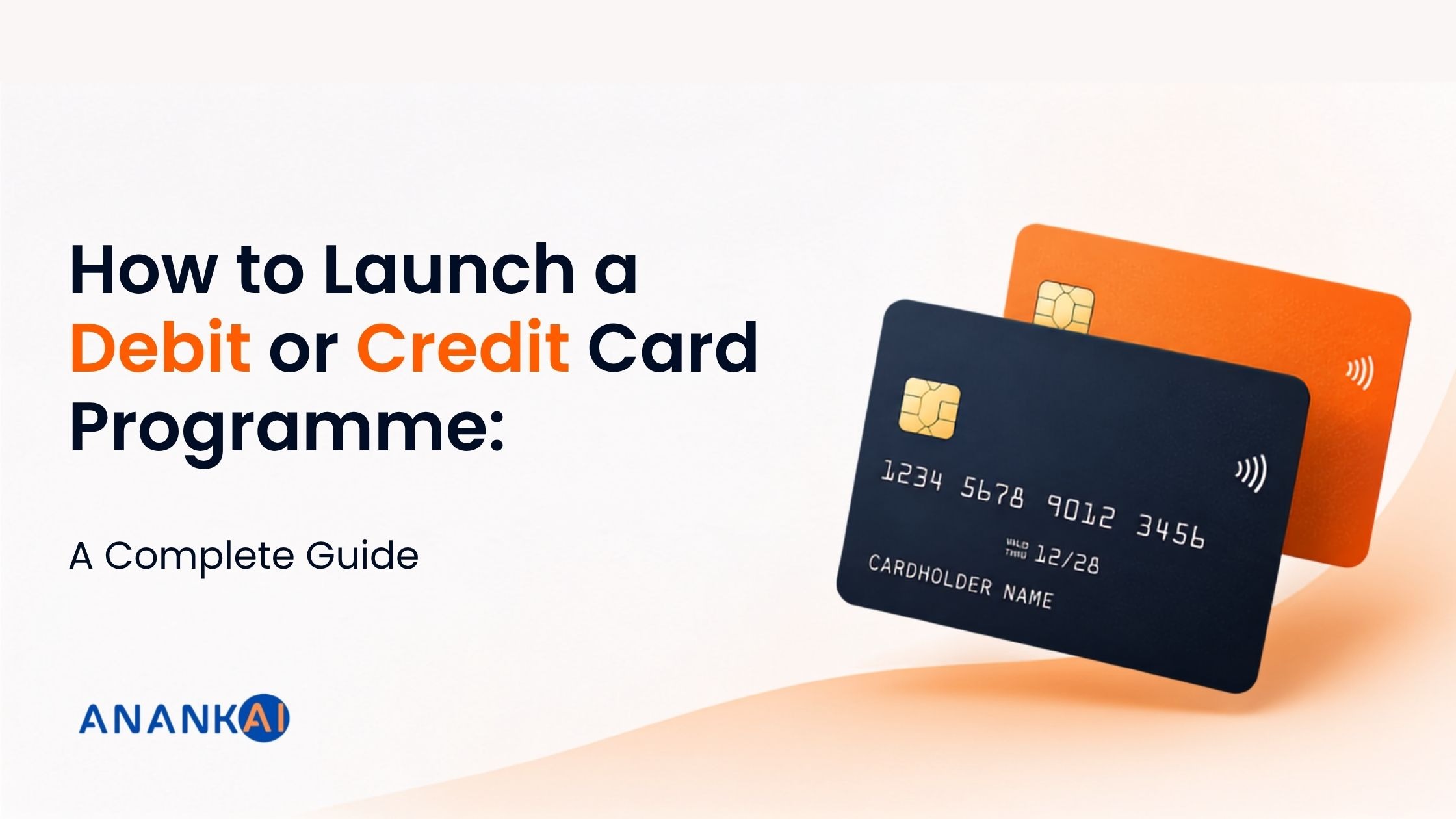
How to Launch a Debit or Credit Card Programme: A Step-by-Step Guide
Launching a debit or credit card programme is no longer limited to traditional banks. Today, fintechs, Electronic Money Institutions (EMIs), digital banks, and other financial institutions can launch card products to deliver secure, convenient, and digital-first payment experiences.
However, launching a card programme involves far more than issuing cards. Financial institutions need the right technology infrastructure, processing partners, compliance framework, and operational capabilities to manage the entire card lifecycle.
In this guide, we explore how to launch a debit or credit card programme, the key components involved, and how the right card management technology can help you build a scalable and compliant solution.
What Is a Debit or Credit Card Programme?
A debit or credit card programme is an end-to-end ecosystem that enables a financial institution to issue cards, manage customer accounts, process transactions, and support customers throughout the card lifecycle.
While debit and credit card programmes have different financial and operational requirements, both require a combination of technology, regulatory compliance, processing infrastructure, and customer service capabilities.
A modern card programme typically includes:
Customer onboarding and identity verification
Card application and issuance
Customer and account management
Transaction processing
Billing and payments
Card servicing and lifecycle management
Risk and fraud management
Regulatory compliance
Analytics and reporting
How to Launch a Card Programme in 2026
Step 1: Define Your Card Programme Strategy
Before selecting technology providers or processing partners, establish a clear strategy for your card programme.
Consider questions such as:
Who is your target customer?
Will you offer debit cards, credit cards, or both?
What customer need will your card product address?
Which countries and markets will you serve?
What features, rewards, or benefits will differentiate your product?
What are your expected transaction volumes and growth targets?
A well-defined strategy provides the foundation for product design, technology selection, regulatory planning, and operational processes.
Step 2: Establish Your Regulatory and Compliance Framework
Regulatory compliance is a fundamental part of any card programme.
Depending on your business model and operating markets, you may need processes covering:
KYC (Know Your Customer)
KYB (Know Your Business)
AML (Anti-Money Laundering)
Fraud and risk management
Data protection and privacy
Regulatory reporting
Audit requirements
Compliance should be incorporated into the programme from the beginning rather than treated as a separate operational function. A strong compliance framework helps reduce risk while supporting sustainable growth.
Step 3: Select the Right Card Processor
A card processor provides the infrastructure required to process card transactions and connect your programme with the relevant payment networks.
When selecting a processor, consider factors such as supported card schemes, geographic coverage, transaction volumes, integration capabilities, security, and scalability.
Depending on the provider and programme structure, processing capabilities may include:
Transaction authorisation
Card issuance support
Payment network connectivity
Clearing and settlement
Fraud and transaction rules
Chargeback processing
Card scheme requirements
The processor is a critical component of your card infrastructure, but it is only one part of the overall solution.
Step 4: Implement a Card Management Platform
While the processor handles transaction processing, financial institutions also need a platform to manage the business and operational aspects of their card programmes.
A modern Card Management System (CMS) can provide capabilities across the card and account lifecycle, including:
Customer onboarding
Customer profile management
Account management
Credit limit management
Interest and fee calculations
Multi-ledger accounting
Billing and statement generation
Payment processing and allocation
Collections and recovery
Customer communications
Compliance management
Portfolio analytics
The right platform provides a central operational layer between your customers, internal teams, and processing infrastructure.
Step 5: Create a Seamless Customer Onboarding Journey
Customers increasingly expect financial products to be available through a fast and intuitive digital experience.
Your onboarding journey should make it easy for customers to:
Submit their personal or business information
Complete identity verification
Complete applicable KYC or KYB checks
Create or link an account
Apply for a card
Receive application and approval updates
Automating these processes can reduce manual work, improve the customer experience, and accelerate time to activation.
Step 6: Manage the Complete Card Lifecycle
Issuing a card is only the beginning. Once a card is active, financial institutions need to manage it throughout its entire lifecycle.
Core card servicing capabilities can include:
Card activation
PIN management
Spending controls
Card blocking and unblocking
Card replacement
Card renewal
Digital wallet integration
Token management
Transaction visibility
Card status management
Centralising these capabilities helps teams manage card operations efficiently while giving customers greater control over their cards.
Step 7: Automate Billing, Payments and Collections
For credit card programmes, accurate billing and payment management are essential.
A robust card management platform should support automation across processes such as:
Interest calculation
Fee management
Billing cycles
Statement generation
Payment processing
Payment allocation
Delinquency management
Collections and recovery
Automating these processes can reduce operational errors, improve efficiency, and provide greater accuracy across financial and customer records.
Step 8: Use Analytics to Monitor Programme Performance
Launching a card programme is an ongoing process. Financial institutions need visibility into customer behaviour, portfolio performance, and operational activity.
Analytics and reporting can help monitor:
Card activation and usage
Transaction volumes and trends
Customer behaviour
Credit exposure
Payment performance
Portfolio growth
Delinquencies
Operational risks
These insights enable teams to identify trends, optimise products, and make better decisions as the programme scales.
How AnankAI Helps Launch and Manage Card Programmes
AnankAI’s Cards Management Platform provides the technology and operational capabilities required to launch and manage modern debit and credit card programmes.
Designed for banks, fintechs, EMIs, and other financial institutions, the platform can integrate with existing card processors, enabling organisations to retain their preferred processing infrastructure while managing card operations through a unified platform.
Key capabilities include:
Customer onboarding with KYC and KYB
Customer profile and account management
Credit limit and risk management
Multi-ledger accounting
Billing and statement generation
Payment processing and allocation
Collections and recovery management
Regulatory compliance
Portfolio analytics and reporting
End-to-end card lifecycle management
By bringing these capabilities together, AnankAI helps financial institutions simplify card operations, accelerate product launches, and build scalable card programmes without unnecessarily replacing their existing processing infrastructure.
Conclusion
Launching a debit or credit card programme requires more than issuing cards. It requires a combination of regulatory readiness, processing infrastructure, card management technology, customer onboarding, and ongoing operational capabilities.
Choosing the right technology architecture can simplify implementation and provide the flexibility needed to scale as your card portfolio grows.
With its Cards Management Platform, AnankAI enables banks, fintechs, and financial institutions to manage key card programme operations through a unified platform while integrating with their existing processing partners.
The result is a scalable foundation for launching, operating, and growing modern card programmes.
Ready to build your card programme?
Contact AnankAI to explore how our Cards Management Platform can support your requirements.
Frequently Asked Questions
1. What do I need to launch a debit or credit card programme?
You typically need the appropriate regulatory permissions or licensed partners, a card processor, card management technology, customer onboarding and verification capabilities, compliance processes, and operational workflows for managing the card lifecycle.
2. Can one platform support both debit and credit card programmes?
Yes. A modern Card Management Platform can support both debit and credit products through a unified infrastructure, subject to the specific product, regulatory, and processing requirements.
3. How long does it take to launch a card programme?
The implementation timeline varies depending on regulatory requirements, processor integrations, product complexity, market, and operational readiness. Selecting technology that integrates with existing infrastructure can help simplify implementation and reduce time to launch.
4. Do I need to replace my existing card processor?
Not necessarily. A card management platform can be designed to integrate with existing processing infrastructure, allowing financial institutions to retain their preferred processor while improving their operational capabilities.
5. What does a Card Management Platform do?
A Card Management Platform manages the business and operational aspects of a card programme, including customer and account management, card lifecycle management, billing, payments, credit management, collections, compliance, and reporting.
Recent Articles

Best Digital Banking Platforms in the UK for Fintechs
Top Digital Banking Software Providers in the UAE