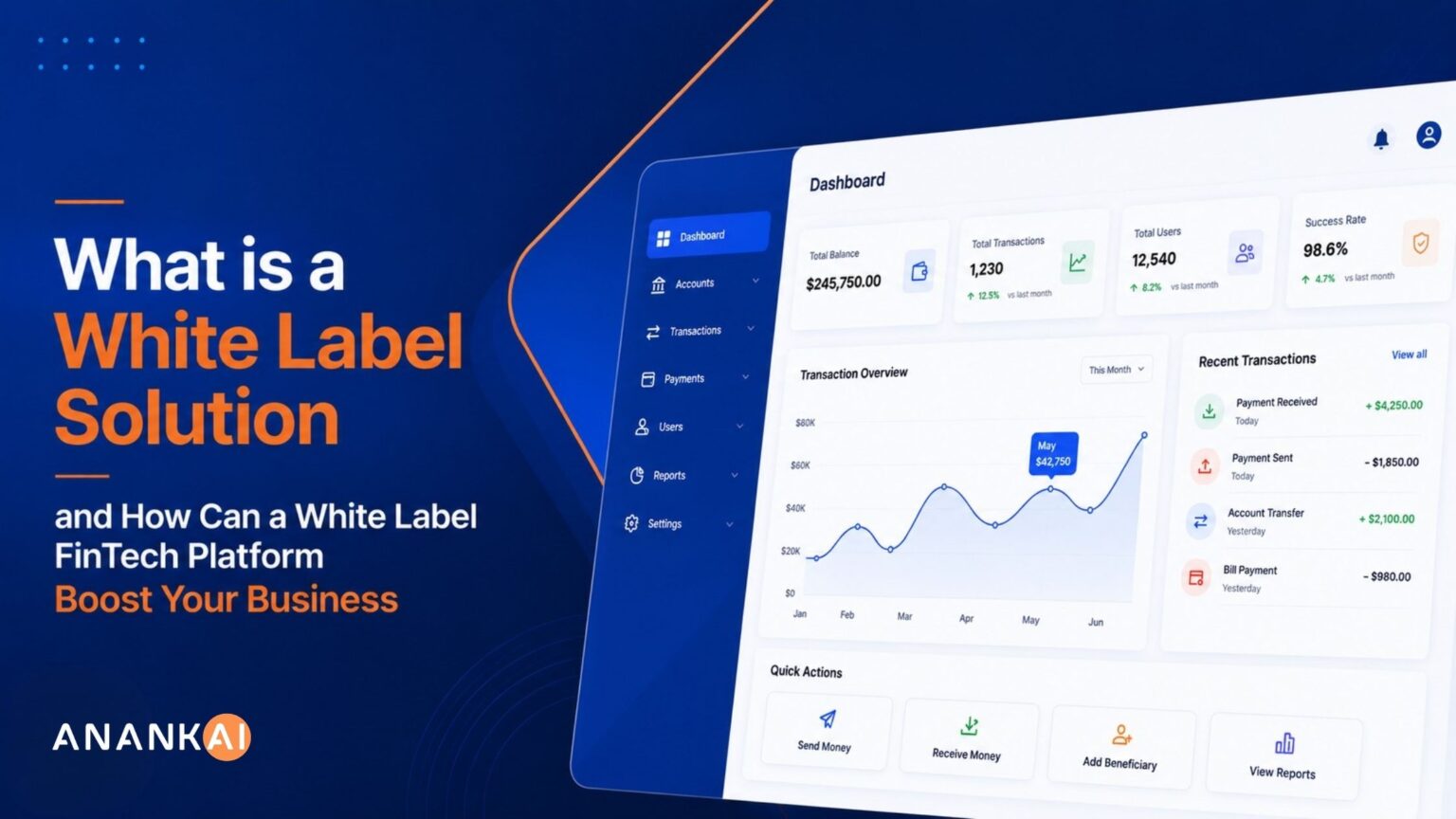
In today’s rapidly evolving financial services landscape, businesses are under increasing pressure to deliver seamless digital experiences, launch products faster, and remain competitive in highly regulated markets. However, building financial technology infrastructure from the ground up requires significant investment, technical expertise, and operational resources.
This is where white label fintech solutions have emerged as a practical and strategic alternative for fintech startups, electronic money institutions (EMIs), payment service providers (PSPs), banks, and SaaS businesses.
What Is a White Label Solution?
A white label solution is a pre-built product or technology developed by one company and rebranded by another company as its own.
In the fintech sector, this means organisations can leverage an existing financial platform such as digital wallets, payment systems, card programmes, or banking applications and offer these services under their own brand identity without having to develop the underlying technology from scratch.
A white label fintech platform enables businesses to customise the user experience, branding, interface, and customer journey while utilising proven technology infrastructure behind the scenes.
Simply put:
You own the customer relationship and brand experience. The technology provider delivers the platform infrastructure.
Why White Label FinTech Solutions Are Gaining Momentum
Customer expectations have changed dramatically. Users now demand instant payments, frictionless onboarding, mobile-first experiences, and reliable financial services.
At the same time, regulatory requirements, security expectations, and operational complexities continue to increase.
Developing a financial platform internally can take months or even years before reaching the market. White label fintech platforms help businesses bridge this gap by providing a ready-to-launch foundation that significantly reduces development timelines and operational complexity.
Instead of focusing resources on building infrastructure, businesses can concentrate on growth, innovation, and customer acquisition.
How White Label FinTech Platforms Work
The process is straightforward:
Partner with a white label fintech technology provider
Configure the platform to align with your branding and user experience
Integrate services through APIs and existing business workflows
Launch financial services under your own brand
Scale operations as customer demand grows
From the end user’s perspective, they interact exclusively with your brand while the technology platform powers the underlying functionality.
For example, a SaaS platform can introduce embedded payment capabilities under its own brand without developing a payment processing system from the ground up.
How a White Label FinTech Platform Can Boost Your Business
1. Accelerate Time to Market
Launching a fintech product traditionally requires lengthy development cycles, extensive testing, and infrastructure setup.
White label platforms eliminate much of this complexity by providing proven technology that is already built and tested, allowing businesses to launch significantly faster and capitalise on market opportunities sooner.
2. Reduce Development Costs
Building financial infrastructure internally often requires substantial investment in software engineering, security, integrations, maintenance, and ongoing platform enhancements.
A white label approach dramatically lowers these costs by providing access to ready-made technology, enabling businesses to allocate more resources towards growth initiatives, customer acquisition, and product innovation.
3. Focus on Business Growth
Successful fintech companies win through strong customer experiences, effective market positioning, strategic partnerships, and scalable business models.
By leveraging a white label platform, organisations can focus on:
Customer acquisition
Product strategy
Revenue growth
Market expansion
Customer retention
while avoiding the complexities of managing backend technology infrastructure.
4. Support Compliance and Security Requirements
Financial services operate within highly regulated environments where security and compliance are critical.
Many fintech platforms include built-in capabilities that support operational requirements such as:
Customer onboarding workflows
Identity verification integrations
AML monitoring integrations
Transaction monitoring workflows
Security and audit controls
This helps businesses establish a strong operational foundation while reducing implementation complexity.
5. Maintain Full Brand Ownership
One of the biggest advantages of a white label platform is that your customers interact exclusively with your brand.
From onboarding and account management to payments and financial services, the entire customer journey can be customised to reflect your identity and value proposition.
This strengthens brand recognition, customer trust, and long-term loyalty.
6. Scale Efficiently
As transaction volumes increase and customer bases grow, infrastructure scalability becomes increasingly important.
White label fintech platforms are designed to support growth, making it easier to expand into new markets, launch additional services, and handle increasing operational demands without rebuilding core systems.
7. Access Advanced Financial Capabilities
Modern white label platforms often provide access to a broad range of financial services through a single technology ecosystem, including:
Digital wallets
Payment processing
Multi-currency accounts
Card issuing capabilities
Virtual IBAN management
Customer onboarding workflows
Reporting and analytics
Risk management integrations
This enables businesses to deliver a comprehensive financial experience without developing each capability independently.
8. Unlock New Revenue Opportunities
A white label fintech platform is more than a technology solution—it can become a revenue-generating business model.
Businesses can create new income streams through:
Transaction-based revenues
Subscription models
Premium financial services
Embedded finance offerings
Value-added customer services
Many SaaS platforms, marketplaces, and fintech providers use white label infrastructure to increase customer lifetime value and diversify revenue sources.
When Should You Consider a White Label FinTech Platform?
A white label approach is particularly suitable when:
You need to launch quickly
Internal development resources are limited
You want to reduce infrastructure complexity
You are validating a new fintech concept
You want to add financial services to an existing product
Scalability and speed are key priorities
However, organisations with highly specialised requirements or unique platform architectures may benefit from a fully customised development approach.
Conclusion
White label fintech platforms have become a strategic growth enabler for modern financial businesses.
Rather than investing years building complex infrastructure, businesses can leverage proven technology to launch faster, scale efficiently, and focus on delivering exceptional customer experiences.
By combining speed, scalability, and operational efficiency, white label solutions help bridge the gap between financial technology innovation and measurable business outcomes.
At Anankai, we provide fintech technology infrastructure that enables fintechs, EMIs, PSPs, and SaaS platforms to launch and scale digital financial products more efficiently. Our platform supports digital banking, payments, wallet infrastructure, compliance workflows, and financial service integrations through a flexible, API-driven architecture.
If you are exploring white label fintech technology or looking to embed financial services into your product, now is the ideal time to start the conversation.